
Last updated November 15, 2026
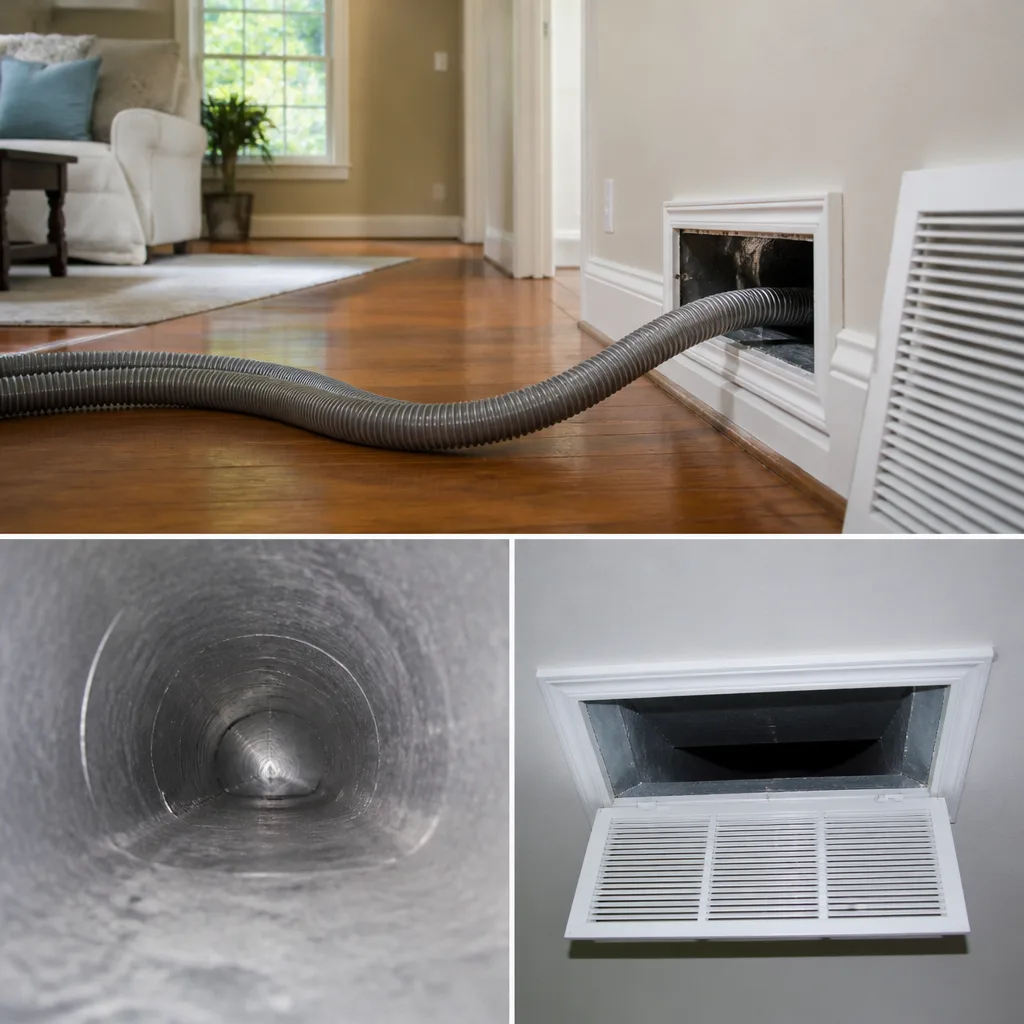 Whole-home duct cleaning
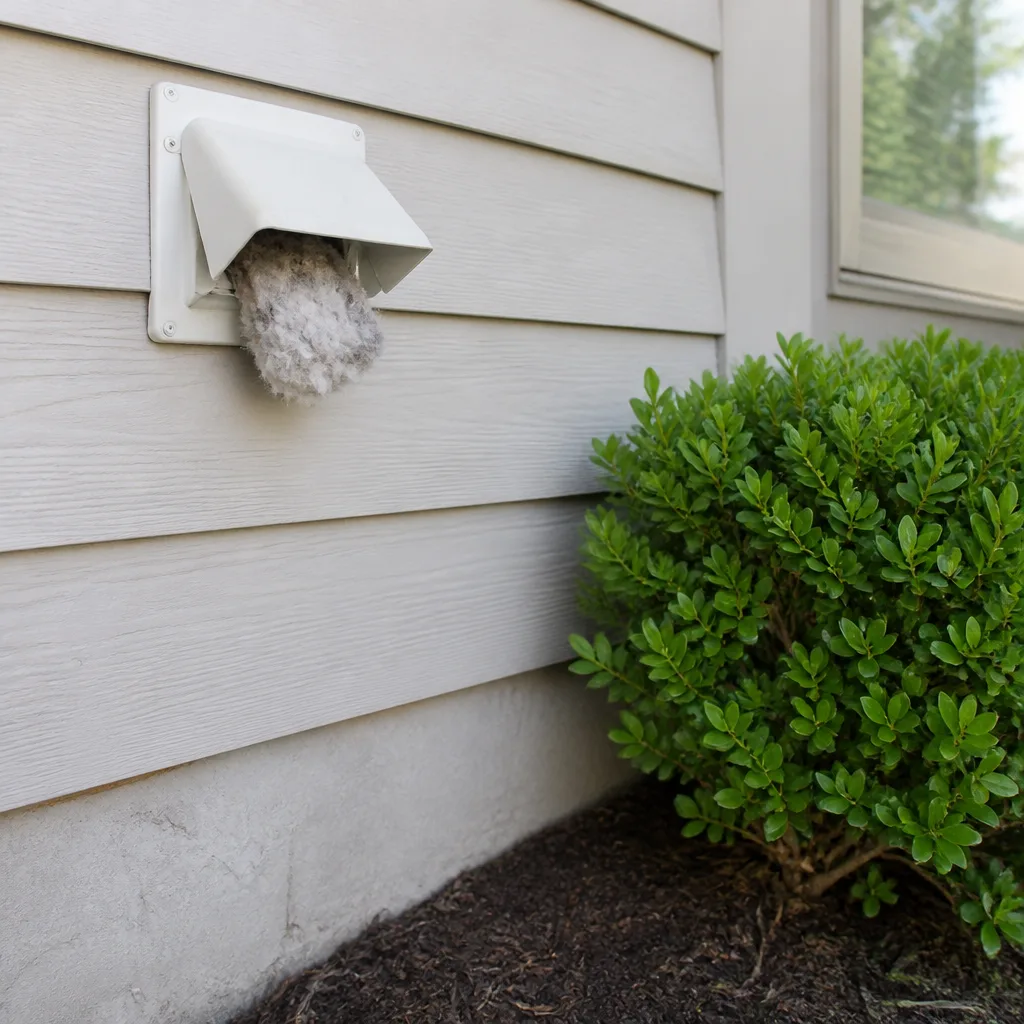 Dryer vent cleaning
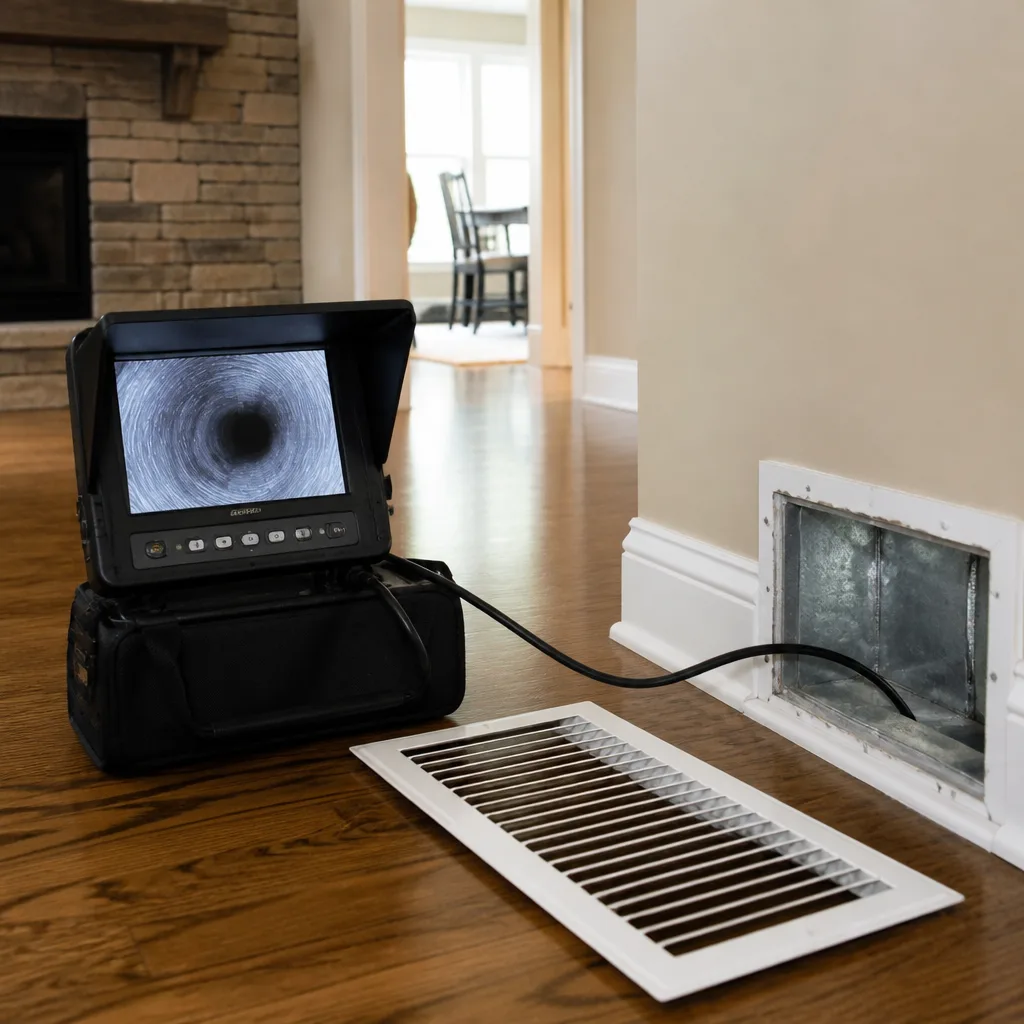 Camera inspection
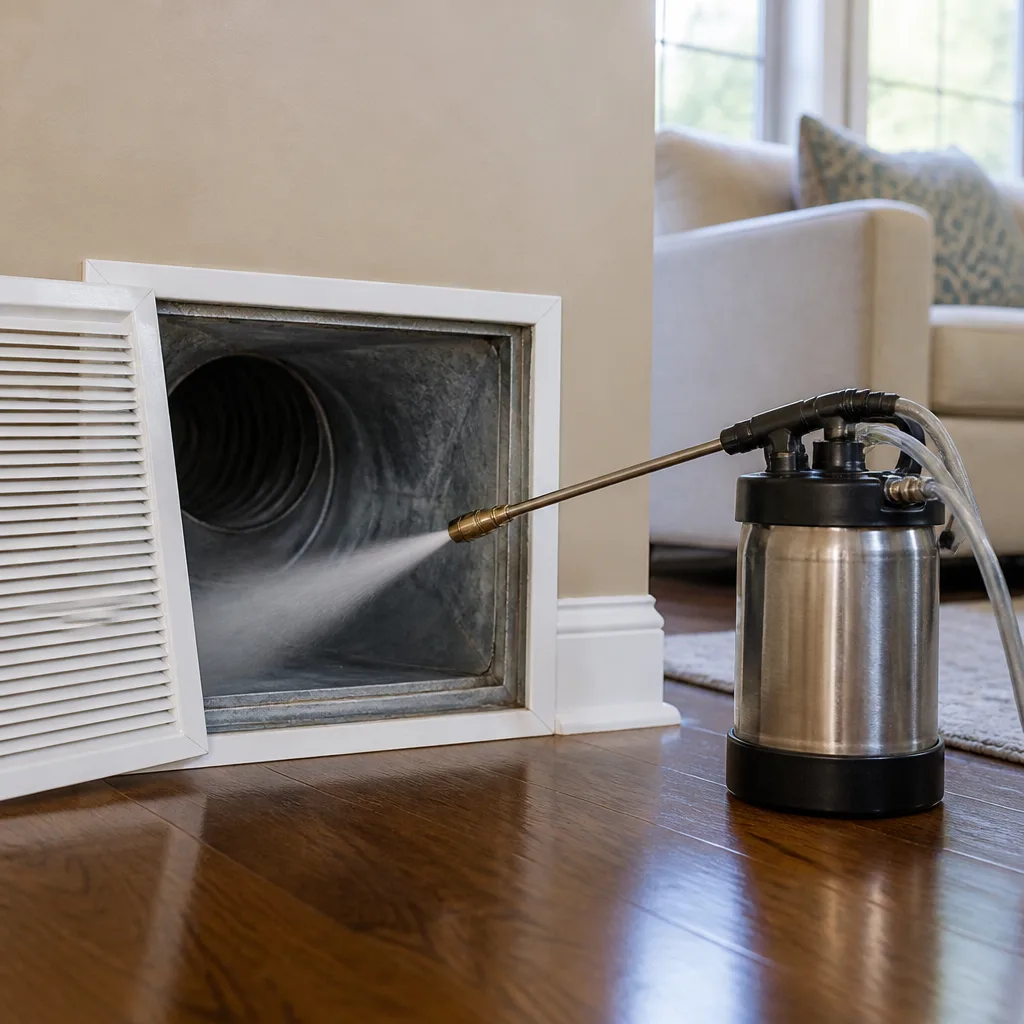 Sanitizing & deodorizing
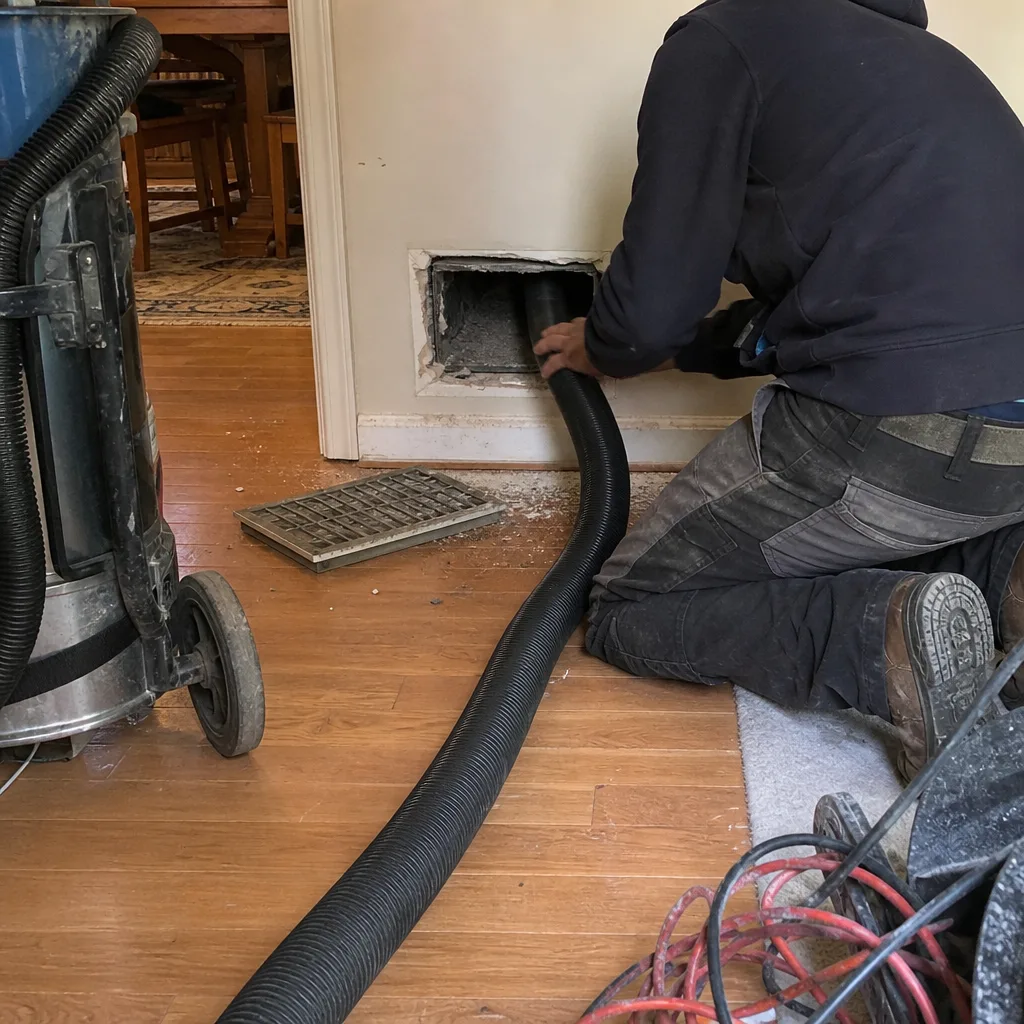
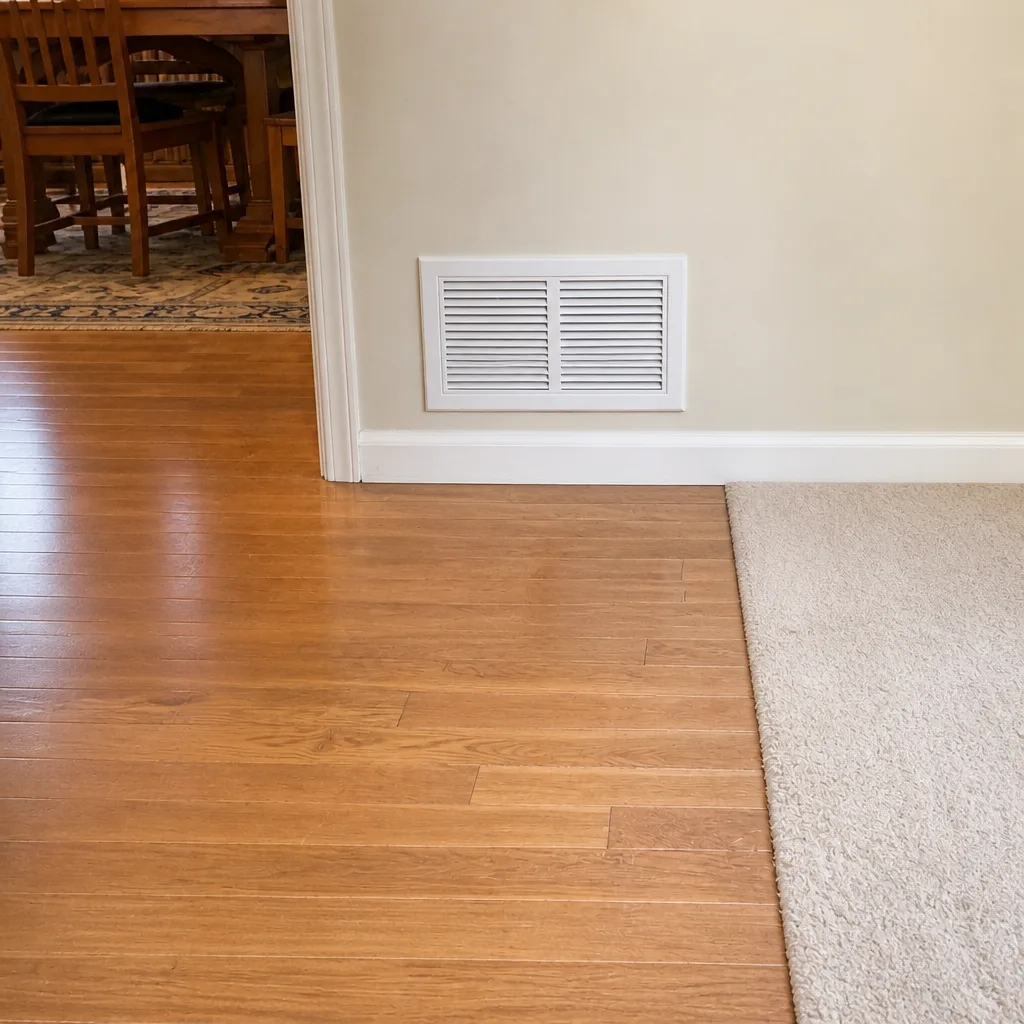
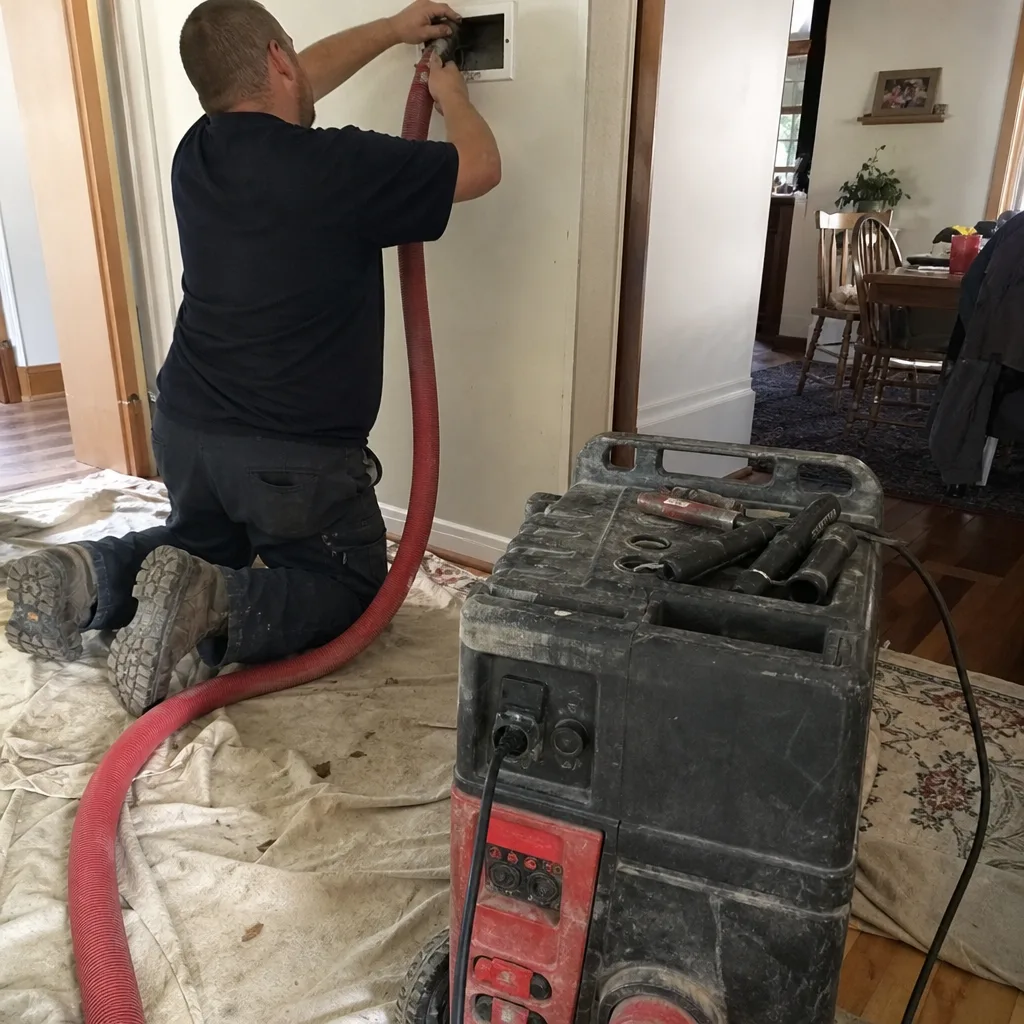
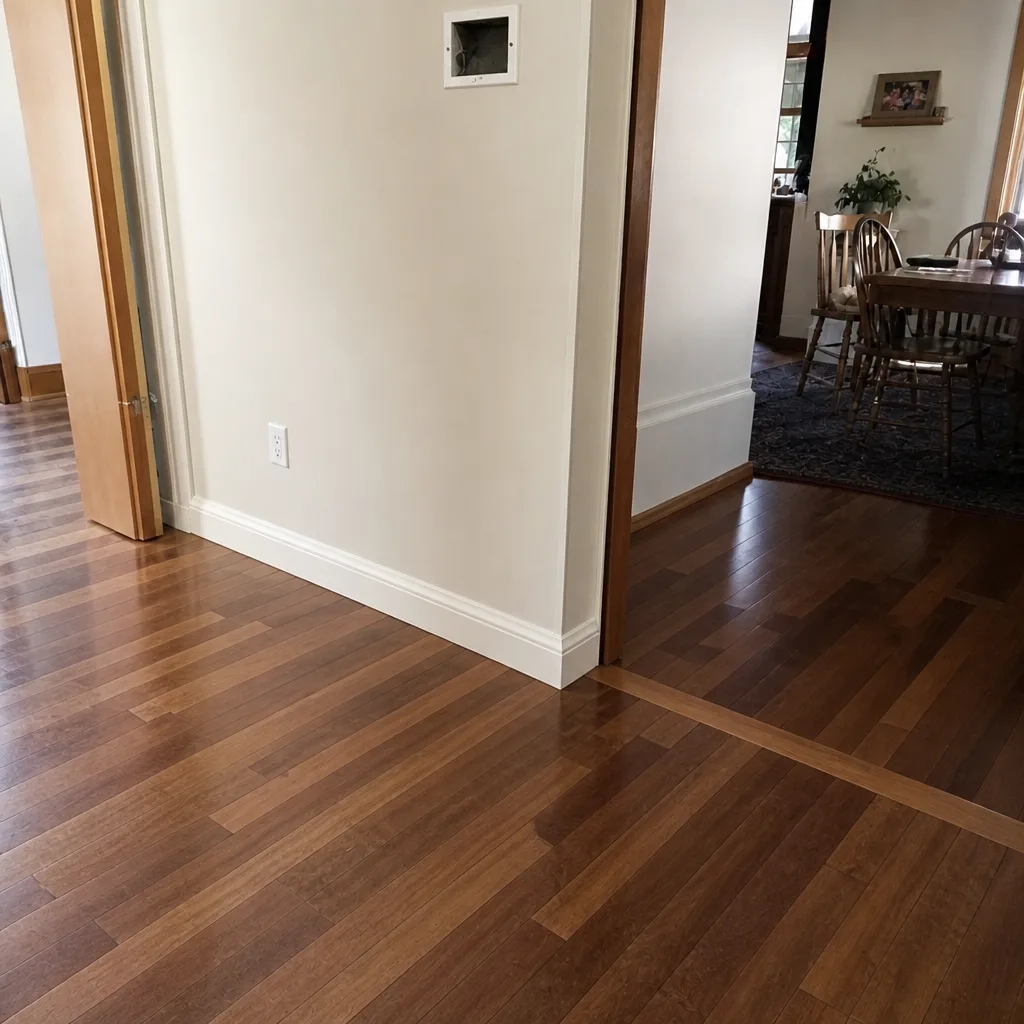
Whole-system duct and dryer vent check with before-and-after photos - you see exactly what came out of your vents
That "$99 whole-house special" is a bait ad - the real number appears once they are in your hallway, or the "clean" is a shop-vac at the register. We photograph the inside of your ducts before and after instead.
Air Duct Cleaning Troubleshooting in Milwaukee: Common Problems and How to Fix Them
If a room in your house is still stuffy or dusty two weeks after a professional duct cleaning, the ducts probably weren’t the root problem. That sounds backward, but it’s one of the most common things we run into across Milwaukee. Cleaning removes what’s inside the ductwork. It doesn’t reconnect a trunk line that pulled apart in the attic, and it doesn’t fix a return that was never sized right. This guide walks you through how to tell the difference between a dirty-duct problem and a structural one, what your system’s symptoms are actually telling you, and when to call a professional who can diagnose and repair the real issue.
Quick Answer
Most persistent duct problems in Milwaukee come down to one of three things: a disconnected or collapsed duct run, a leaking joint or poorly balanced system, or a moisture and mold problem the cleaning didn’t address. A thorough air duct cleaning fixes contamination inside the ducts, but only a company that also inspects with a camera and offers duct repair can tell you which category you’re actually in. If airflow is still uneven or odors linger after cleaning, the next step is a diagnostic inspection, not another cleaning.
Styles & brands we work with
- Whole-home duct cleaning
- Dryer vent cleaning
- Camera inspection
- Sanitizing & deodorizing
Table of Contents
- Is It Dirty Ducts or a Structural Problem?
- Airflow Tests You Can Run Yourself
- Why Rooms Are Still Uneven After Cleaning
- Musty Odors: Before and After Cleaning
- How Freeze-Thaw Cycles Stress Milwaukee Ductwork
- Camera Inspection vs. Cleaning Blind
- Repair or Replace? Reading the Damage
- Common Mistakes to Avoid
Is It Dirty Ducts or a Structural Problem?
The first thing to sort out is whether you’re dealing with contamination or a physical failure of the duct system. These two problems look identical from the living room: weak airflow, dust settling on surfaces, a room that never quite gets comfortable. The difference shows up when you look inside the system.
Dirty ducts are a contamination issue. Dust, dander, and debris accumulate on the interior surfaces of the ductwork, and cleaning removes it. Structural problems are a mechanical issue. A flexible duct run can collapse, disconnect at a fitting, or get crushed under insulation. A rigid trunk line can separate at a seam. When that happens, air that should reach a bedroom dumps into the attic or crawlspace instead. No amount of cleaning fixes that, because there’s nothing to clean in a duct that’s no longer connected.
Here’s how the two categories break down:
- Contamination symptoms: visible dust on supply registers, dust settling quickly after cleaning, a musty smell when the system first kicks on, visible buildup on the inside of a register boot.
- Structural symptoms: one or two rooms with persistently weak airflow while others are fine, a room that was comfortable last year and isn’t now, whistling or rushing sounds at certain registers, temperature swings that cleaning didn’t change, higher energy use without a change in habits.
The tell is timing. If the problem is contamination, cleaning makes a measurable difference within days. If airflow is still wrong two weeks after cleaning, you’re almost certainly looking at a structural issue. In our experience working through Milwaukee homes, that’s the moment a lot of customers realize they need a repair-focused inspection rather than another cleaning pass.
Airflow Tests You Can Run Yourself
You don’t need special equipment to get a first read on your system. Three simple tests will tell you a lot about whether airflow is restricted, leaking, or reasonably balanced before you call anyone.
- The paper test at the registers. Hold a single sheet of tissue or toilet paper near each supply register while the system runs. It should flutter and pull toward the register with steady force. A weak flutter or a register that barely holds the paper suggests restricted flow to that run. Do this at every supply in the house and note which rooms are weak.
- The return-air test. Do the same at the return grilles. Return airflow should feel noticeably stronger than supply airflow, and every return should be drawing. A return that’s barely pulling can starve the whole system and throw off balance across the house.
- The filter-and-door test. Check your filter. A clogged filter restricts the entire system. Then compare airflow with interior doors open versus closed. If closing bedroom doors makes some rooms much worse, your system likely lacks adequate return paths and may have a balancing problem rather than a cleaning problem.
Write down what you find. Note which rooms are weak, which are strong, and whether the pattern is consistent. That record is genuinely useful when a technician inspects the system, because it points them toward the specific runs worth checking with a camera. A pattern of one weak room is a much stronger clue than a vague sense that “the air feels off.”
What these tests can’t tell you is where the problem lives. Weak airflow at one register could mean a crushed flex run, a disconnected fitting behind a wall, a closed damper, or a balancing issue. That’s the part that requires a camera and a technician who knows how to read a duct system. But the tests narrow the field, and they give you a way to check the results after any work is done.
Why Rooms Are Still Uneven After Cleaning
Uneven room temperatures after a cleaning almost always point to duct leakage or improper balancing, not residual debris. Cleaning removes what was sitting on the duct walls. It doesn’t change where the air goes. If the system was delivering too little air to a back bedroom before cleaning, it delivers the same too-little air afterward, just cleaner.
There are a few distinct causes worth understanding:
- Duct leakage. Every joint, seam, and connection in a duct system can leak. A leaky supply run loses conditioned air into the attic or crawlspace before it ever reaches the room. In Milwaukee’s older housing stock, where ductwork has been modified, extended, or patched over the decades, leakage is common and easy to miss without inspection.
- Disconnected runs. A flexible duct that has slipped off a collar dumps its entire airflow into an unconditioned space. The register feels weak because almost nothing is arriving, even though the system is running fine.
- Improper balancing. A system with too much air going to nearby rooms and not enough reaching the far end of the house needs its dampers adjusted. Balancing is a matter of adjusting the system, not cleaning it.
- Oversized or undersized equipment. When the furnace or air handler doesn’t match the duct system, no amount of cleaning or sealing fully closes the gap, though sealing and balancing can help considerably.
The practical takeaway is that a room-by-room temperature survey belongs in any serious duct assessment. If you can tell a technician which rooms run hot in summer and cold in winter, that pattern points directly to the runs and joints worth inspecting. Cleaning makes the air cleaner; sealing and balancing make it even.
Musty Odors: Before and After Cleaning
Musty odors mean different things depending on when they appear, and the timing matters more than most people realize. An odor you noticed before cleaning and still notice after is a different problem from an odor that shows up only after the work is done.
A musty smell that was there before cleaning and lingers afterward is a strong signal that moisture is present somewhere in the system. Cleaning removes the surface growth, but if the moisture source remains, the growth comes back. The usual culprits are a wet evaporator coil, water in the drain pan, a humid crawlspace feeding the return, or condensation forming on cold duct surfaces in summer. Mold requires moisture, so the fix is finding and stopping that moisture, not cleaning the same surfaces repeatedly.
An odor that appears only after cleaning is more often a matter of loosened debris or a product residue working its way through. It usually clears as the system runs. If it doesn’t clear within a few days, that’s worth a call back to inspect.
When the moisture source is confirmed and there’s actual growth, mold remediation may be the correct next step rather than another cleaning. In our experience, the honest version of that conversation involves camera inspection and a clear explanation of what was found, not a sales pitch for a repeat cleaning. Containment matters here too. Professional work uses negative-air equipment from Abatement Technologies and HEPA filtration to keep disturbed contaminants contained rather than spreading them through the house. That standard of care is what separates remediation-grade work from a quick surface pass.
How Freeze-Thaw Cycles Stress Milwaukee Ductwork
Milwaukee’s climate is hard on duct systems, and the specific mechanism is the freeze-thaw cycle. Winter temperatures drop well below freezing, and the swing between freezing nights and warmer days repeats through the season. Any ductwork running through an attic, crawlspace, or exterior wall passes through different climates than the conditioned rooms it serves.
The result is repeated expansion and contraction. Flexible duct, in particular, suffers. The inner liner that carries the air is a thin membrane, and the flex duct’s connections to collars and boots depend on tape, mastic, and mechanical fasteners holding tight. Over enough cycles, that tape dries, the mastic cracks, and a connection that was airtight starts leaking. Sometimes the flex duct slips off the collar entirely.
What makes this maddening is that the symptoms mimic dirty ducts. Airflow drops to a room, dust starts settling, and a homeowner assumes the ducts are dirty. The actual problem is a disconnected run dumping conditioned air into a cold attic. Cleaning won’t change it, because the duct carrying the air isn’t connected anymore.
Crawlspace and attic ducts are the prime suspects in Milwaukee. A few things are worth checking:
- Condensation on the outside of cool duct surfaces during humid summer weather, which can mean the vapor barrier is compromised.
- Sagging or kinked flexible runs in the attic, where insulation has shifted and crushed the duct.
- Visible tape peeling or mastic cracking at joints you can see from the access point.
- Seasonal patterns: a room that’s fine in mild weather but fails in the coldest and dampest stretches.
The fix is to reconnect, reseal, and in some cases replace the failed run, then verify with a camera that the rest of the system is sound. This is exactly why air duct repair belongs alongside cleaning. A company that only cleans has no way to close that gap.
Camera Inspection vs. Cleaning Blind
The single biggest difference between a good duct company and an average one is this: does it document what it finds inside your system? A company that cleans blind runs the equipment, collects the debris, and moves on. It has no way to know whether it passed a disconnected run, a collapsed section, or a moisture problem. It simply cleans what it can reach and leaves.
A camera inspection changes the conversation. The technician snakes a camera through the system, sees the interior of the ductwork, and documents what’s there. That evidence becomes the basis for a real diagnosis. It also lets the homeowner see the same thing the technician sees, rather than taking a claim on faith.
What an inspection-driven process looks like in practice:
- Before-and-after camera documentation. Photos of the duct interior before cleaning and after, so you can see what was addressed.
- Containment during work. Negative air pressure and HEPA filtration keep debris from spreading through the house while the system is open.
- Findings turned into a diagnosis. Loose joints, disconnected runs, crushed sections, and moisture all get flagged and explained.
- Repair options presented separately. Cleaning fixes cleanliness. Repair fixes structure. A company that offers both can explain which one your system actually needs.
Whitman Air Duct Cleaning uses professional equipment from Nikro and Abatement Technologies precisely because this work requires purpose-built gear. Consumer-grade vacuums and improvised tools can’t contain debris or reach the far ends of a duct system. They also can’t document anything. When you’re comparing quotes, ask what equipment the company is bringing and whether you’ll see before-and-after photos of your own ducts. A confident company will answer both questions directly.
Repair or Replace? Reading the Damage
Once a problem is found, the next question is whether it can be repaired or needs replacement. The answer depends on the extent and type of damage. Most isolated failures are repairable. Widespread deterioration of a flexible duct system is usually a replacement job.
Repairable in most cases:
- A disconnected flexible duct run that slipped off a collar or boot.
- Loose, cracked, or failed seals at joints and seams.
- A crushed or kinked section of flex duct where the run is otherwise sound.
- A single damaged register boot or takeoff.
- Insulation that has shifted off a duct run and needs to be reset.
Usually better to replace:
- Flexible duct with a torn or deteriorated inner liner over a long stretch.
- Widespread moisture damage with confirmed growth the cleaning can’t resolve.
- Ductwork that was undersized from the start and can’t support the equipment.
- Rigid duct with extensive rust or collapse in an unconditioned space.
The decision should come from what the camera shows, not from a guess. A repair that reconnects a single failed run is often a modest job and restores airflow immediately. Replacement of an entire deteriorated system is a larger project, and it’s worth knowing that up front. Either way, the work belongs to a company that does repair as a standing service line, not one that cleans and refers the rest out. If you’re still sorting out whether your ducts are even the problem, a full Whitman Air Duct Cleaning assessment can separate contamination from structural failure before any work begins.
Common Mistakes to Avoid
- Assuming cleaning will fix uneven airflow. Cleaning addresses contamination, not balance. If one room is still cold after cleaning, the problem is leakage or balancing, and another cleaning won’t help.
- Hiring a company that can’t do repair. A cleaner with no repair capability has no way to fix a disconnected or collapsed run. Ask up front whether repair is a service line, so you don’t find out mid-diagnosis.
- Skipping the camera inspection. Without documentation, you can’t tell what was actually addressed. Insist on before-and-after photos of your own duct interior.
- Ignoring moisture. A musty smell that lingers before and after cleaning is a moisture problem. Find the water source first, or growth returns.
- Overlooking attic and crawlspace ductwork. In Milwaukee’s freeze-thaw climate, the worst duct damage is often in spaces no one looks at. Those runs are the first place to inspect.
- Forgetting the dryer vent. Your dryer vent is part of the system too. A clogged vent restricts drying and adds a fire risk that duct cleaning won’t touch. dryer vent cleaning is a separate, worthwhile step.
- Accepting a quote with no scope. A number over the phone without a look at the system tells you nothing. A written estimate after inspection does.
See the difference
 Before
 After
 Before
 After
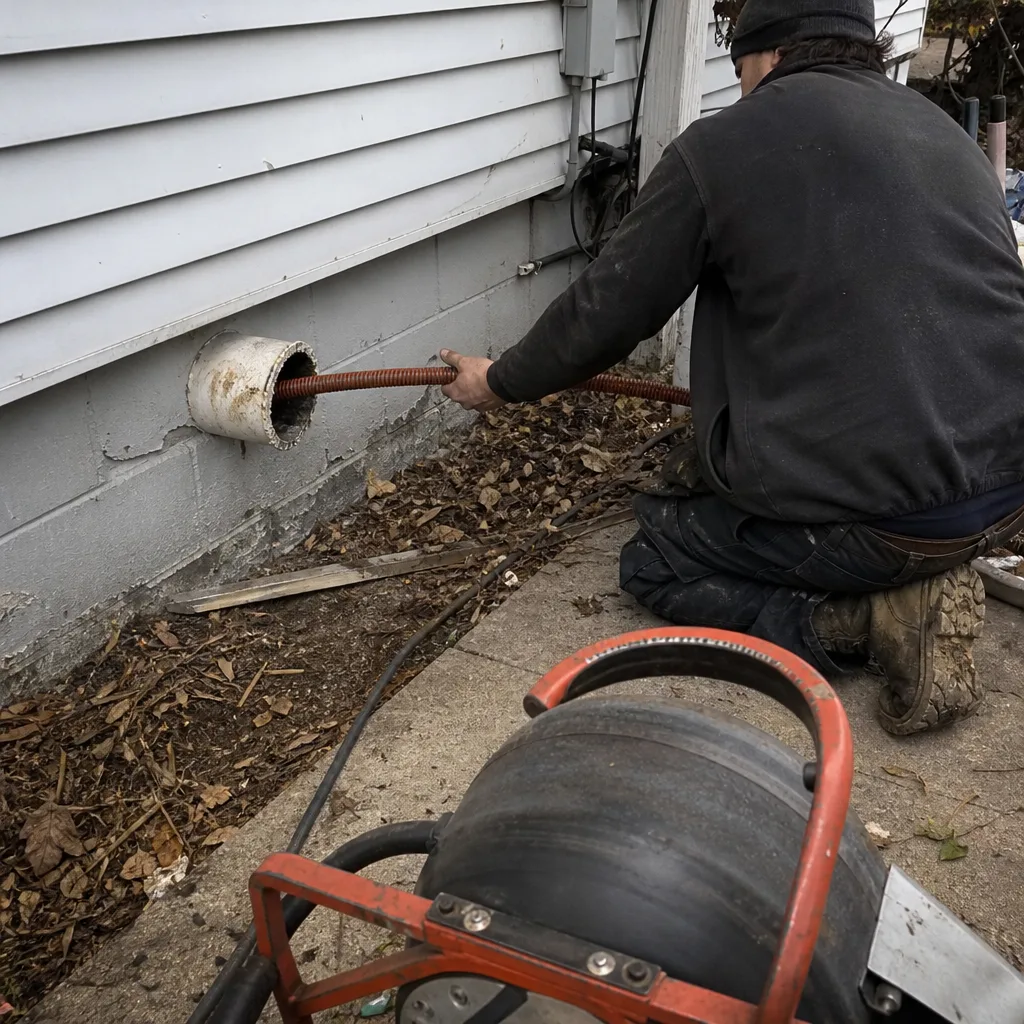 Before
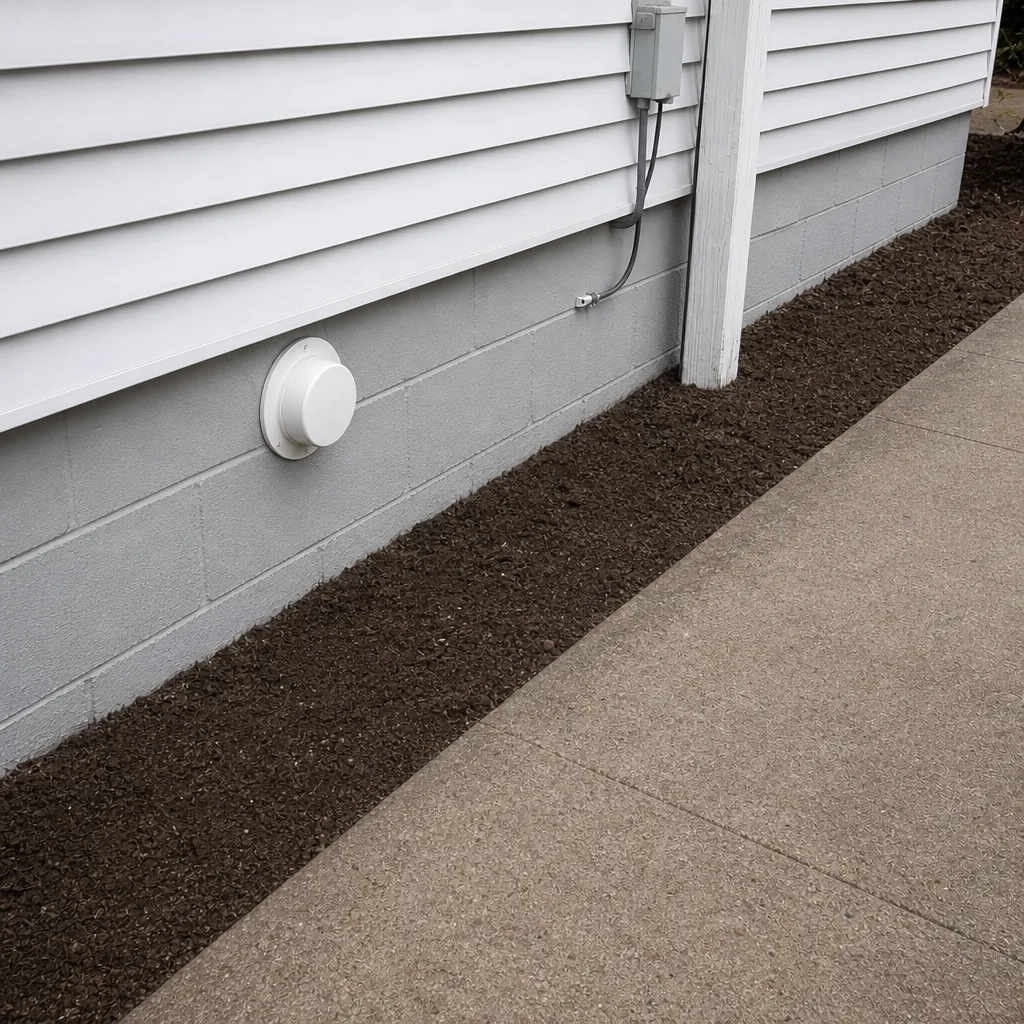 After
When to Call a Professional
Call a professional when the symptoms persist after cleaning, when airflow to one or more rooms has dropped and stayed low, when you smell a musty odor that returns within days of cleaning, or when you can see sagging, kinked, or unsealed ductwork in an attic or crawlspace. A room that was comfortable last season and isn’t now is a strong signal that something mechanical changed. When work is done without inspection, problems get missed and money gets spent on cleaning that doesn’t address the cause. Whitman Air Duct Cleaning offers free estimates in Milwaukee – call (866) 729-3894. We answer 24/7, with fast dispatch from 7am to 7pm, Sunday through Friday.
Frequently Asked Questions
Residual dust after cleaning usually comes from either a short settling period or a leak in the system. Some loosened dust works its way out over the first few days. If dust keeps settling weeks later, the more likely cause is a disconnected or leaking duct pulling in unfiltered air from an attic or crawlspace.
Typical air duct cleaning in the Milwaukee area generally runs in the range of a few hundred dollars for a standard home system, with the final price set by a written estimate after inspection. Larger homes, difficult access, or systems needing repair land at the higher end. A free estimate is the only way to know your actual number, so call (866) 729-3894 for an exact quote.
No, not by itself. Cleaning removes debris from inside the ductwork but doesn’t change where air flows. Uneven temperatures point to leakage, disconnected runs, or balancing issues, and those require duct repair or system adjustment rather than cleaning.
A musty smell that lingers after cleaning almost always points to an active moisture source somewhere in the system. Mold needs moisture, so the fix is locating the water, whether it’s a wet coil, a drain pan issue, or a humid crawlspace feeding the return, and addressing it. If growth is confirmed, mildew removal becomes the next step rather than another cleaning pass.
The cheapest quotes usually skip something: they clean without inspection, use equipment not built for ductwork, and don’t document what they find. The result is a low price and a system that’s still broken. Ask what equipment the crew is bringing, whether a camera is used, and whether you’ll get before-and-after photos of your own ducts. Call (866) 729-3894 for a free estimate with the scope spelled out.
Most homes do well with cleaning every few years, though homes near ongoing construction, homes with pets, and homes with a recent renovation may need it sooner. The more useful question is functional: if airflow or dust has changed, have the system inspected rather than waiting for a calendar date.
The Bottom Line
Most duct problems that survive a cleaning aren’t cleaning problems at all. They’re structural failures, leakage, or moisture, and those need a different kind of response. Learn to read your system’s symptoms. Run the simple airflow tests, note which rooms are off and in what pattern, and ask any company you call whether they inspect with a camera and whether they do repair. Before-and-after photos of your own ducts, professional equipment from brands like Nikro and Abatement Technologies, and a written estimate set the standard. If your air still isn’t right after cleaning, that’s the moment to find out what’s actually going on. Call (866) 729-3894 for a free estimate. We answer 24/7, with fast dispatch from 7am to 7pm, Sunday through Friday.
Written by the team at Whitman Air Duct Cleaning.