
Last updated November 15, 2026
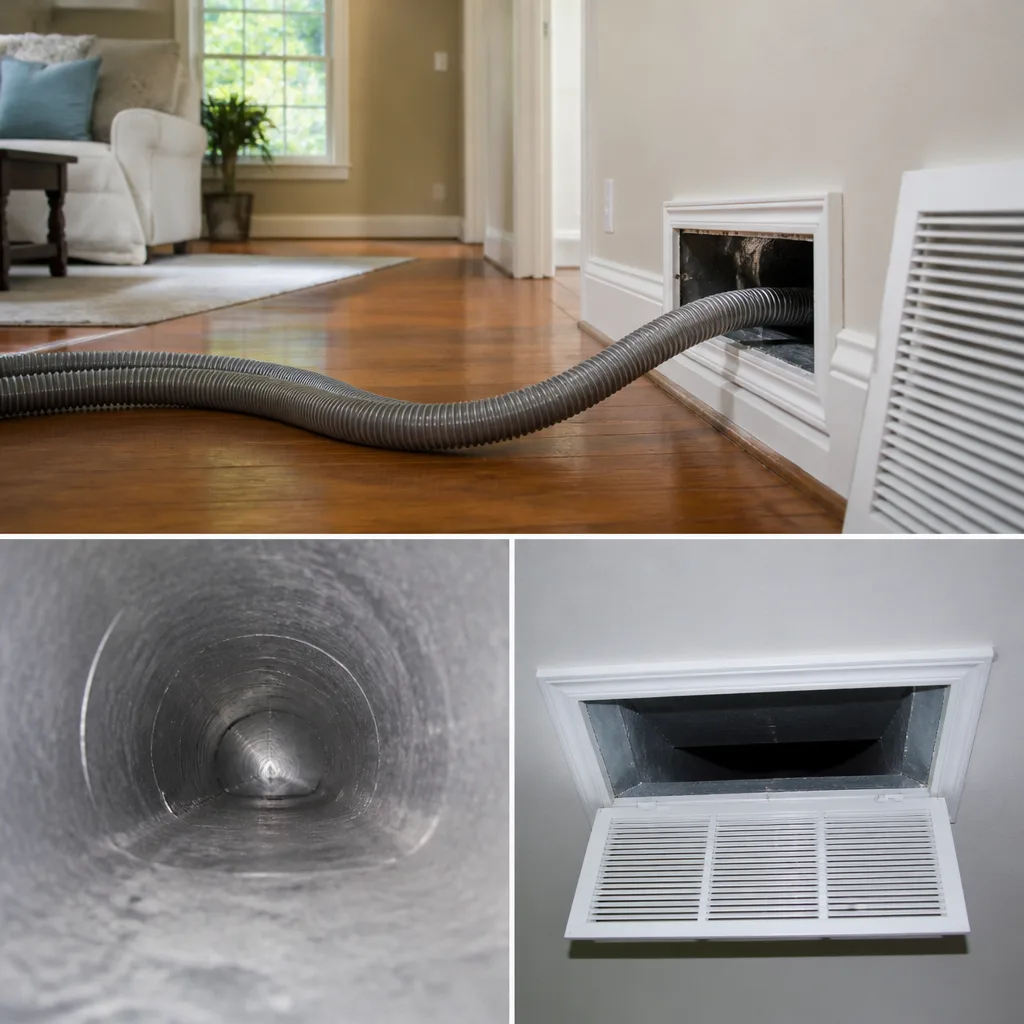 Whole-home duct cleaning
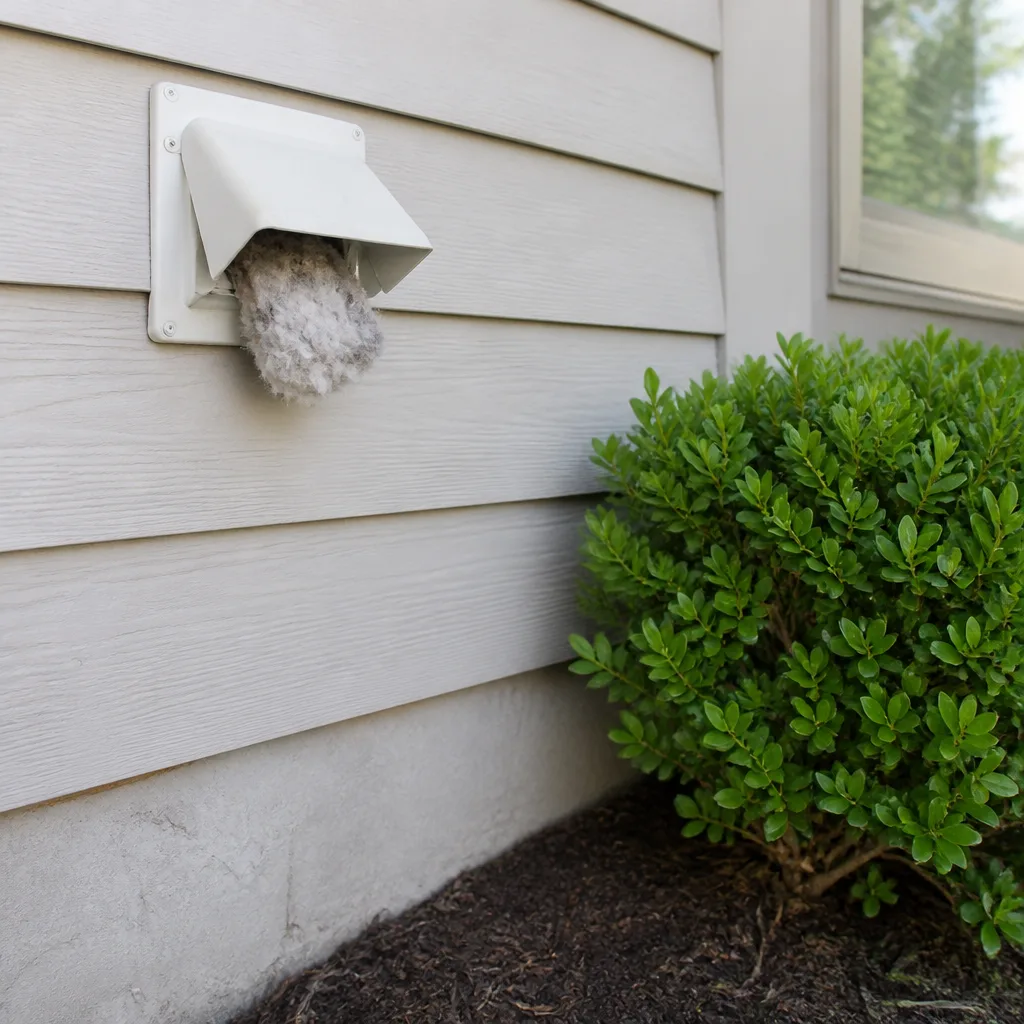 Dryer vent cleaning
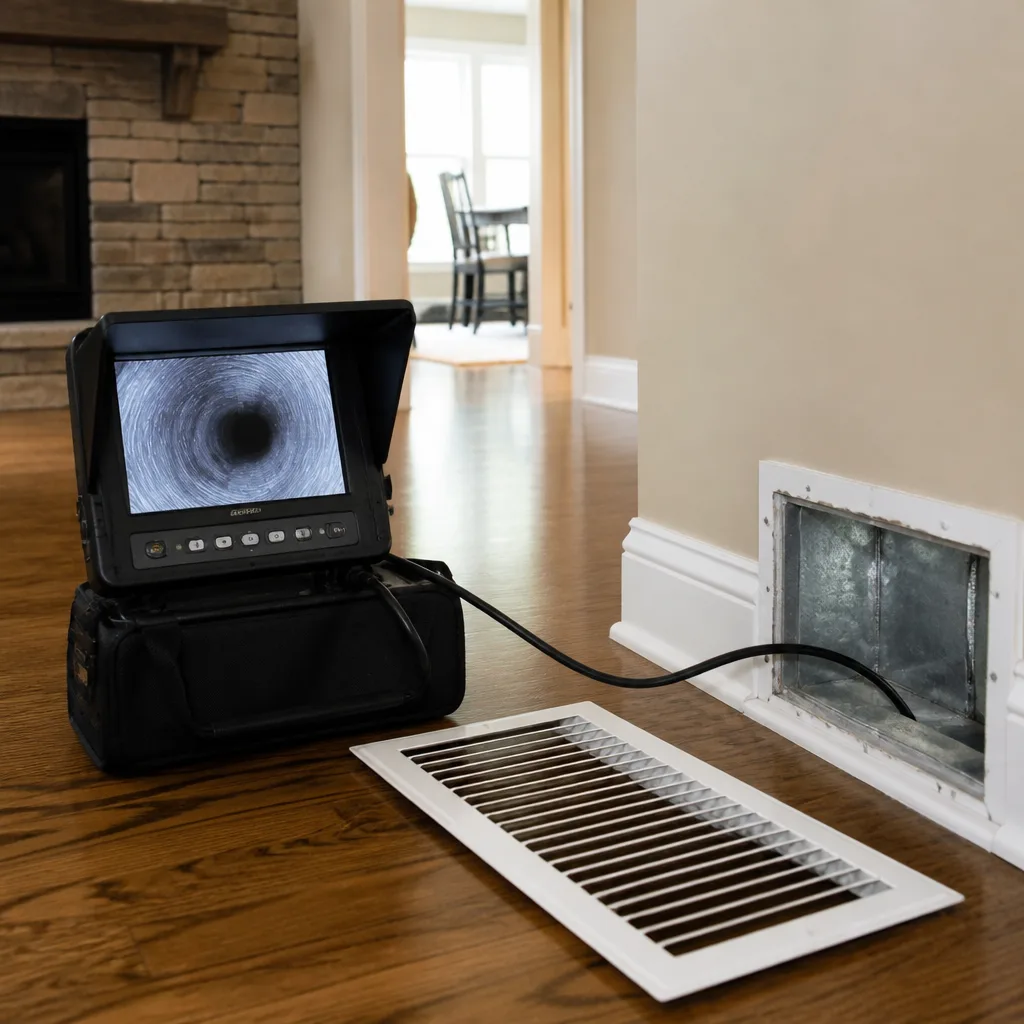 Camera inspection
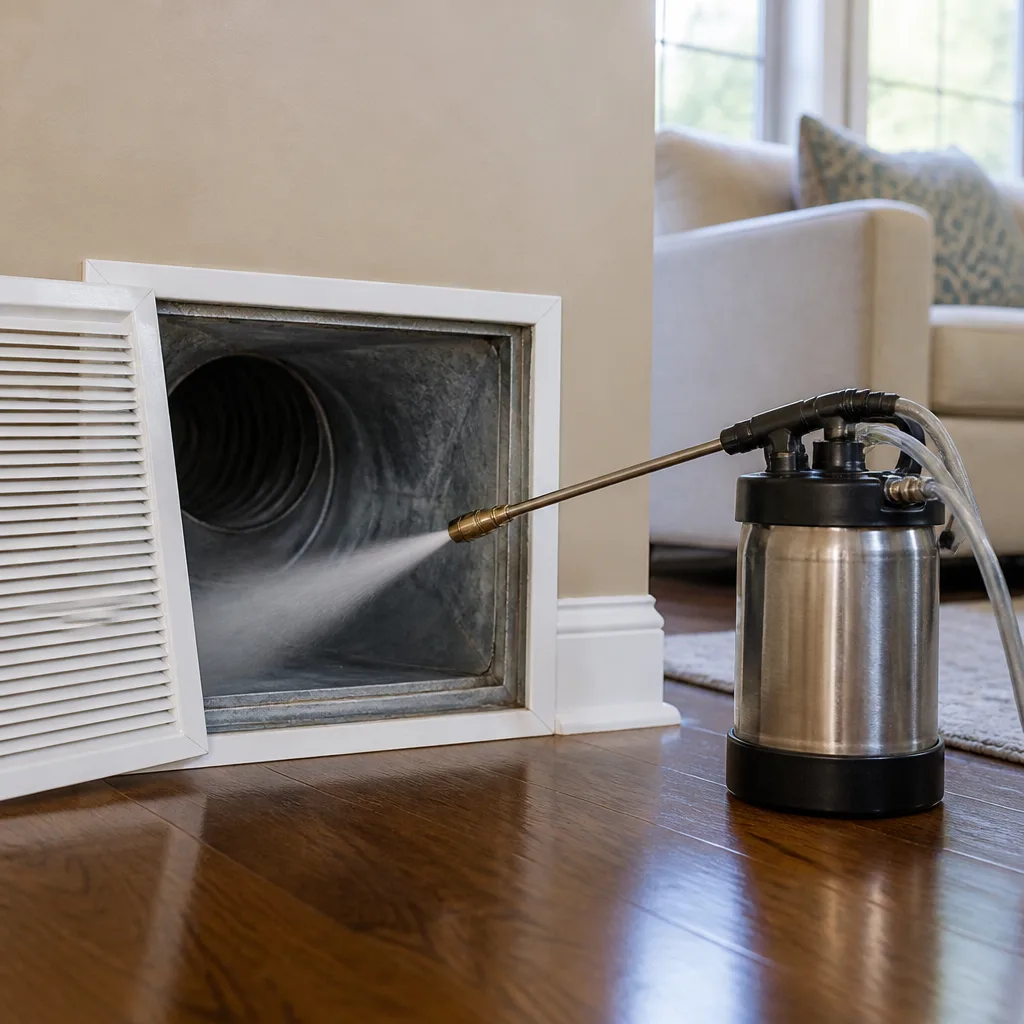 Sanitizing & deodorizing
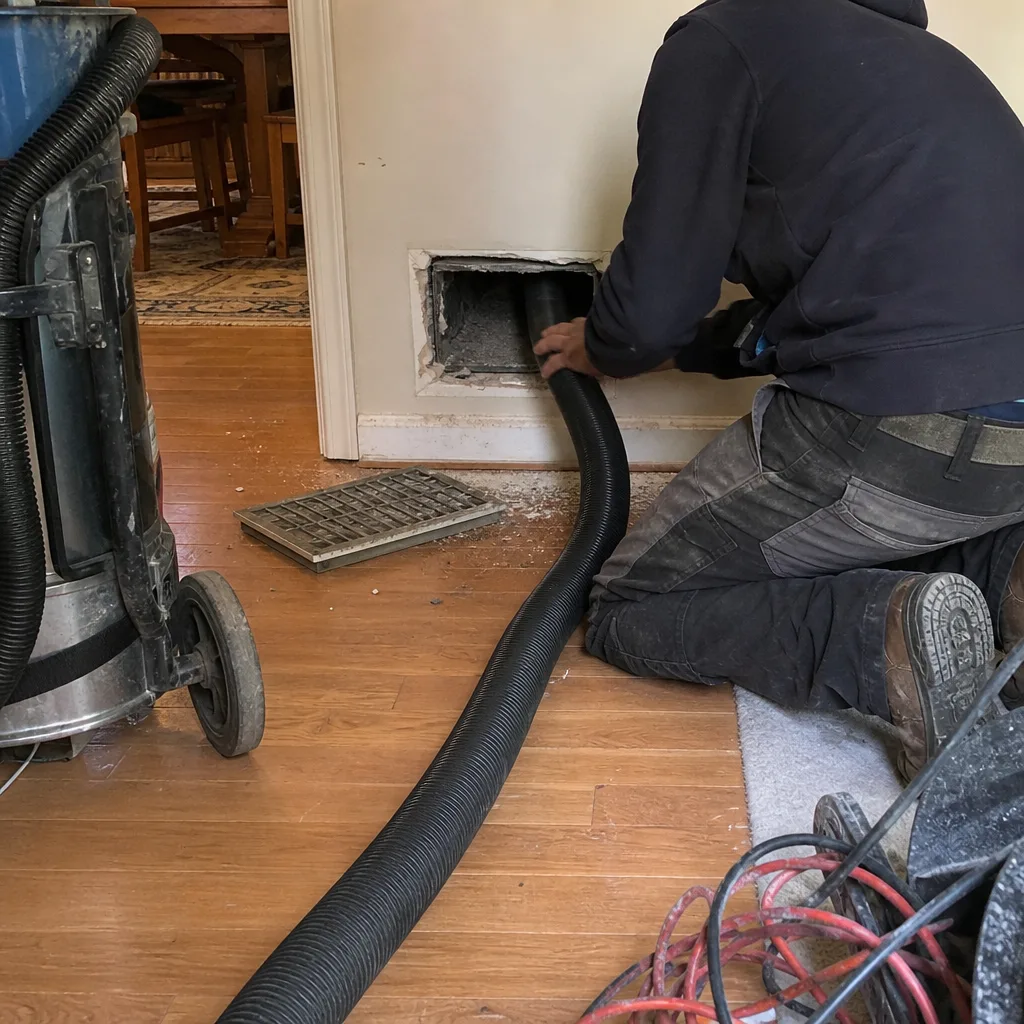
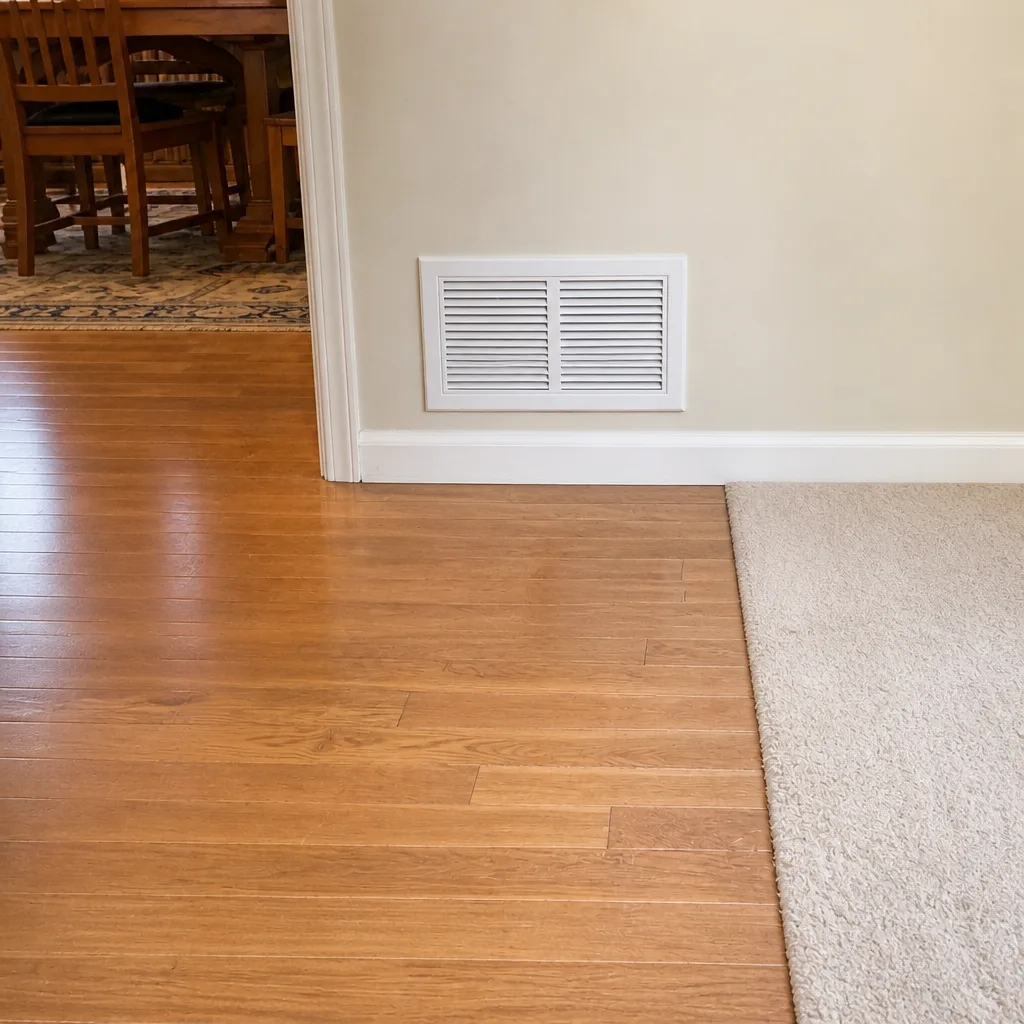
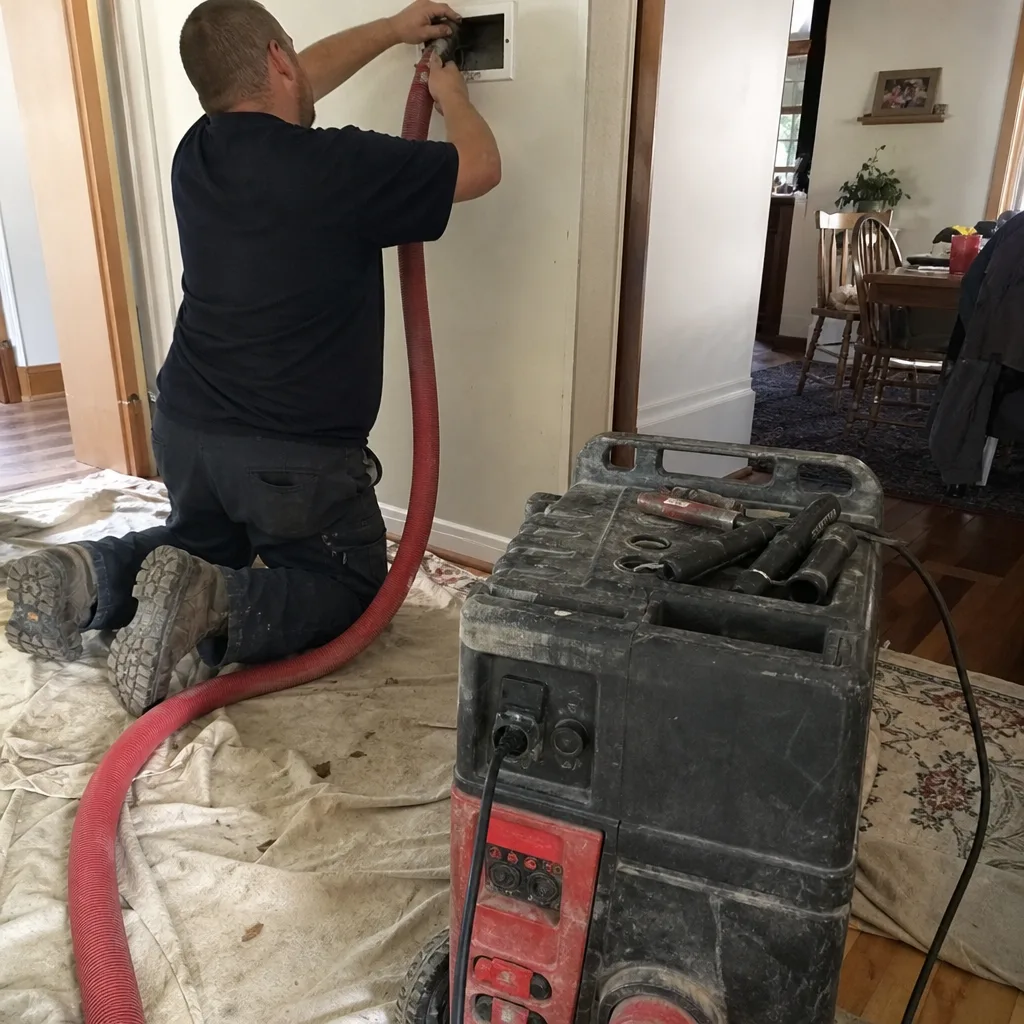
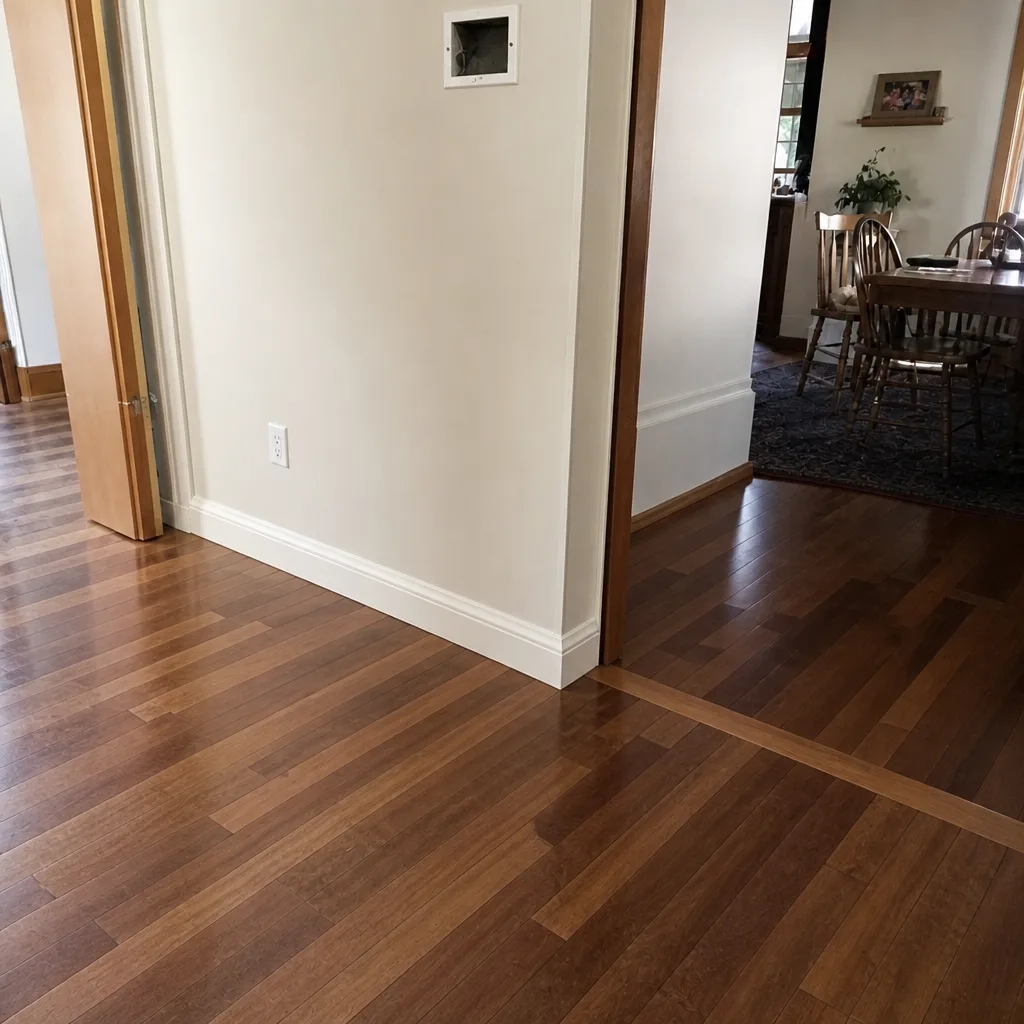
Whole-system duct and dryer vent check with before-and-after photos - you see exactly what came out of your vents
That "$99 whole-house special" is a bait ad - the real number appears once they are in your hallway, or the "clean" is a shop-vac at the register. We photograph the inside of your ducts before and after instead.
Air Duct Cleaning Warning Signs: A Milwaukee Homeowner’s Reference Guide
By the time you notice visible dust blowing from a register, the contamination event that caused it may have been cycling through your home for weeks. The earlier warning signs are subtler, and almost no homeowner resource covers them. Most guides tell you to watch for “dust, musty smells, and allergies” – which is like diagnosing a car by waiting for the engine to smoke. In this guide, we work backward from specific, observable symptoms to their likely cause inside the duct system, so you can describe what’s happening in your Milwaukee home accurately and know exactly what kind of inspection you need.
Quick Answer
The most reliable air duct cleaning warning signs in Milwaukee are not visible dust but pattern changes: dust collecting on one side of a room, a room that’s consistently harder to heat or cool, a musty or burning smell that appears only when the furnace or AC runs, and debris around floor registers in older homes with uninsulated basement runs. If two or more of these patterns hold for more than a few weeks, the system needs an inspection, not another filter change.
Styles & brands we work with
- Whole-home duct cleaning
- Dryer vent cleaning
- Camera inspection
- Sanitizing & deodorizing
Table of Contents
- What Do Dust Patterns Tell You About Your Ducts?
- What Do Different Smells From Your Vents Mean?
- Why Is One Room Harder to Heat or Cool?
- How Do You Tell Pest Evidence From Insulation Debris or Biological Growth?
- How Do Milwaukee’s Older Homes Show Different Warning Signs?
- Dirty System, Failing Filter, or Duct Leak: Which Is It?
- When Do Milwaukee Seasons Trigger the Worst Symptoms?
- What Happens During a Professional Duct Inspection?
What Do Dust Patterns Tell You About Your Ducts?
Dust accumulation is diagnostic, not just cosmetic. Where dust collects – and how fast – points to a specific failure inside the system. A dirty duct system spreads dust fairly evenly across every room it serves. A leaking duct pulls dust from the wall cavity or attic into the airstream and deposits it near the leak’s discharge point. A failing filter lets fine particulate through and shows up as a thin gray film that returns within days of cleaning. Learning to read the pattern tells you which of the three you’re looking at, and what to ask for when you call.
The three dust patterns worth knowing
- Uniform film across every room. This pattern suggests contamination inside the main trunks and branch runs. It usually develops slowly over a heating and cooling season and worsens when the blower runs constantly. A duct cleaning to remove the accumulated load is the typical next step.
- Dust concentrated along one wall or one register. This pattern points to a disconnected joint, a gap in a boot, or a compromised flex run near that discharge. The duct is pulling dusty air from a wall cavity or from a basement that hasn’t been cleaned. That’s a repair problem before it’s a cleaning problem.
- Dust returning on furniture within a week of cleaning. Dust that reappears fast after you wipe, or after a filter swap, often means the filter itself isn’t sealing in its frame. Air is bypassing the filter around the edges. A cheap filter that doesn’t fit tightly performs worse than a mid-grade filter that seals.
A fourth pattern worth flagging: dust with visible fibers or dark specks in it. That can indicate degrading duct liner or interior insulation breaking down. It’s not a cleaning-only issue. Whitman Air Duct Cleaning handles air duct cleaning and repair under the same call specifically because these two symptoms often show up together.
What Do Different Smells From Your Vents Mean?
Odor is the most underused diagnostic signal in residential duct work. Each smell class maps to a different zone and cause. If you can describe the smell accurately, a technician can pre-plan the inspection instead of spending time finding the source. Here’s the breakdown.
- Burning or hot-dust smell when the heat first kicks on. This is often the most benign: dust settling on the heat exchanger burns off on the first cold-weather cycle. But if the smell persists past the first week of heating season, or returns every cycle, it can indicate a cracked heat exchanger or an overheating blower motor. Both are gas-appliance and electrical concerns – get a licensed HVAC technician to inspect before you spend money on duct cleaning.
- Musty or wet-basement smell that’s strongest in specific rooms. Musty odor typically originates from the return side, where humid air from a damp basement or crawlspace gets pulled into the system. In Milwaukee, where summer humidity is high and many basements are finished but not dehumidified, a musty return is common. The fix is often a combination of return-side cleaning and addressing the moisture source, not just cleaning.
- Chemical or solvent smell. This is a red flag. It can come from stored chemicals in a basement that get drawn into a return grille, off-gassing materials near a supply run, or a refrigerant leak at the coil. Stop using the system and have it evaluated before you run it again.
- Sewer or rotten smell near a floor drain. Not a duct problem. It’s a dry trap or a sewer line issue. Duct cleaning won’t help, and a technician should tell you so before you pay.
Why the zone matters
A smell that only appears when the AC runs points toward the evaporator coil, condensate pan, or a wet boot. A smell that only appears when the furnace runs points toward the heat exchanger or intake. A smell that’s always present regardless of equipment points toward standing contamination in the ducts themselves. Matching the smell to the equipment cycle is the fastest way to describe the problem to whoever you call.
Why Is One Room Harder to Heat or Cool?
Airflow asymmetry – one room that’s consistently harder to heat or cool than the rest – is one of the most reliable duct inspection triggers a homeowner can watch for. It’s easy to write off as “just an old house” or “just that side of the house.” Sometimes it is. But when the imbalance develops or worsens over time, it often means something is restricting or leaking inside the system. In our experience, a room that used to be fine and no longer is a bigger red flag than a room that’s never worked well.
Here are the questions that separate a design problem from a contamination problem:
- Did this room ever heat or cool well? If yes, and it’s gotten worse, suspect a partially disconnected run, a collapsed flex duct, or debris blocking a damper. That’s a duct inspection and likely a repair.
- Is the register weak all season, or only during peak heating or cooling? Seasonal weakness points toward undersized ducting or a system capacity issue. Year-round weakness points toward a blockage, disconnect, or crushed run – often in uninsulated attic or crawlspace ducting.
- Is there a temperature difference of more than a few degrees between the register and the room? Wide temperature spreads at the register suggest the air is losing heat (or gaining it) through an uninsulated or leaking duct run before it reaches the room.
- Does the room feel damp or smell different from the rest of the house? Dampness plus poor airflow often means a duct is drawing from a wet crawlspace or basement and dumping that air into the room.
Milwaukee’s older homes have a lot of duct runs in unconditioned basements and knee-wall attics. Those runs are where most airflow asymmetry issues start, and they’re also the runs most worth inspecting for leaks and interior contamination.
How Do You Tell Pest Evidence From Insulation Debris or Biological Growth?
Three very different problems produce debris in and around registers: pests, degrading insulation, and biological growth. They look similar in a quick glance and require entirely different next steps, so this is worth getting right before you call anyone. Here’s a visual guide to telling them apart.
Pest evidence
- Droppings shaped like small dark pellets clustered near registers, boots, or return grilles.
- Nesting material (shredded paper, insulation fibers, grass) packed into a boot or register cavity.
- Gnaw marks on flexible duct or on the foil-faced exterior of duct board.
- Scratching or scuttling sounds inside the system when it runs – often a sign a pest is still active.
Pest evidence is a two-step problem: remove the pest, then clean and repair the duct. Cleaning without exclusion doesn’t solve anything. Whitman Air Duct Cleaning can handle the duct repair and cleaning side once the pest issue is addressed, and we’ll tell you plainly when exclusion needs to come first.
Insulation debris
- Uniform, gray or yellow fibrous material – looks like the inside of a fiberglass batt.
- Often appears as thin fibers blowing out of a register or settling on the floor below one.
- Common in homes with older duct board or disintegrating interior liner.
Insulation debris means the duct itself is breaking down. Cleaning alone will not fix it – repair or liner replacement needs to happen, and it’s the reason Whitman offers air duct repair as a service line rather than treating cleaning as the only tool.
Biological growth
- Dark, fuzzy, or speckled patches visible on the interior of a register boot or duct interior.
- Wet or damp patch on duct surfaces near the coil or in a humid basement run.
- A near-constant musty odor that doesn’t go away after cleaning the register.
- Recent water damage, a foundation leak, or a longstanding basement humidity problem in the house.
Visible biological growth calls for a remediation-style approach, not a light cleaning. We bring Abatement Technologies equipment to the job because containment and negative-air control matter whenever growth is suspected – it prevents contaminants from spreading through the home during the work. If you suspect growth, describe it on the call; it changes the scope, the equipment, and the timeline.
How Do Milwaukee’s Older Homes Show Different Warning Signs?
Milwaukee’s housing stock runs from mid-1800s worker cottages to postwar ranches to newer infill construction. That range produces warning signs a generic duct cleaning guide won’t mention, because the same “dust + smell + allergies” list assumes a house built in the last 30 years. In an older Milwaukee home, the warning signs often live in the bones of the system.
Warning signs specific to older Milwaukee homes
- Cast iron floor registers. Many older Milwaukee homes still have original cast iron floor registers with heavy grates and gravity-feed ducting beneath. The gaps around these registers are larger than modern boots, and dust accumulates in the cavity between the grate and the duct. Debris blowing up from below is common and often mistaken for system-wide contamination.
- Uninsulated basement runs. Basement duct runs in pre-1950 homes are often bare sheet metal. In Milwaukee winters, warm air traveling through those runs condenses in damp basement air, and the cycle of condensation and drying is what feeds biological growth and interior rust. Rust flaking off inside a bare-metal run is a distinct warning sign that often only shows up in older homes.
- Original plenums and hand-fabricated trunk lines. Older plenums were often built from sheet metal on-site and sealed with materials that have long since broken down. Failed plenum seams leak air into the basement and pull basement dust into the system. That’s a repair problem, and it’s far more common in Milwaukee’s older neighborhoods than in newer construction.
- Additions built on top of original ducting. A rear addition or dormer added to an older home is often served by extended branch runs that weren’t engineered for the original system. Those runs are usually the ones that develop airflow problems first.
- Original returns added later. Many older homes were built with supply-only ducting, and a return was added decades later, sometimes tapped into a crawlspace or a poorly sealed cavity. That return is often where a musty odor starts.
These signs behave differently than the newer-construction signs, and they’re the ones that most deserve a proper inspection from someone with experience on this housing stock. That’s exactly why we do this work across Milwaukee rather than treating it as one market among many.
Dirty System, Failing Filter, or Duct Leak: Which Is It?
These three problems present in overlapping ways and get misdiagnosed constantly. Getting the distinction right saves you from a cleaning that doesn’t solve the actual problem. Use this simple decision tree before you call.
Run the test in this order
- Check the filter first. Look at the filter while the system is running. If dust is bypassing around the edges of the filter frame, the filter isn’t sealing. Replace it with one that fits snugly, watch the room dust for two weeks, and see if it holds.
- Check for visible leaks you can reach. Any joint where duct sections meet, any boot where a supply register enters the floor, and any connection at the plenum are candidate leak points. You can feel a leak with a hand while the blower runs. You shouldn’t try to repair ducting inside walls or in tight attic spaces yourself – and ducted systems in older homes often contain contamination you don’t want disturbed without containment.
- Compare dust across rooms. If dust returns in every room at the same rate, the system itself is loaded. If it’s concentrated in one or two rooms, look for a leak or disconnect serving those rooms.
- Look at the return grille. A return grille that’s visibly loaded with dust and debris is a “system loaded” signal – even if the supplies look clean.
- Check the blower compartment. If you’re comfortable opening the access panel (power off first), a heavily dusted blower wheel is another sign of system-wide contamination, not just a filter issue.
If the filter test doesn’t change anything and dust returns within a week, the system is loaded and cleaning is the right next step. If dust is concentrated in one or two rooms and the filter test changed nothing, ask for a duct inspection that includes a leak check.
When Do Milwaukee Seasons Trigger the Worst Symptoms?
Milwaukee’s climate drives duct symptoms on a seasonal rhythm, and understanding it helps you tell the difference between “this is normal for the season” and “something is actually wrong.” Two transition periods matter most: the switch to heating in fall and the switch to cooling in late spring.
Fall: the burning-dust smell window
The first heat cycle of the season after months of idle summer will produce a hot-dust smell in nearly every home. That’s dust that settled on the heat exchanger burning off. It should fade within a few cycles over a week. If it doesn’t fade, or if it returns every time the furnace restarts, treat it as a heat-exchanger or combustion concern and get an HVAC technician on it before thinking about duct cleaning.
Late spring: the humidity window
The first AC cycle after the winter dry-out often surfaces musty smells. In Milwaukee, where late spring brings a fast humidity jump, a basement return will start moving damp air into the system as soon as the AC starts. If you notice a musty smell only in the first few weeks of AC season, the return side and the basement humidity level are the two things to check first.
Winter: the airflow window
Airflow asymmetry becomes most obvious in January and February when the difference between a warm room and a cold room is uncomfortable, not just measurable. If a room that was tolerable in November is unbearable by January, that’s an airflow signal worth investigating before you give up on it.
Summer: the condensation window
July and August in Milwaukee put condensation loads on every uninsulated duct run in every damp basement. This is when wet-dry cycles age duct liner fastest and when biological growth is most likely to show new signs. A musty smell that appears in July and fades in October is still worth a look in the fall, not something to ignore until spring.
What Happens During a Professional Duct Inspection?
A proper inspection isn’t a technician shining a flashlight down a register and saying “yeah, it’s dirty.” It’s a structured look at the whole system, using the right equipment. Here’s how it should go.
- A walkthrough with the homeowner. We start by asking what patterns you’ve noticed – which rooms, which seasons, which smells. That guides everything else.
- Access panel review. We open the furnace and coil access panels to look at the blower, coil, and plenum connections. Dust at the blower confirms system-wide load; a disconnect at the plenum confirms a leak.
- Camera inspection of the main trunks and branch runs. A purpose-built camera goes into the ducting so we can actually see what’s inside. This is where the difference between “dust,” “insulation debris,” and “biological growth” gets settled.
- Leak check. Joints, boots, and plenum seams are checked by hand and by feel while the blower runs.
- Return-side review. Return grilles, the return trunk, and the return-side cavity get their own look, since most odor problems originate there.
- Written findings. You get a clear picture of what we found, what the options are, and what the actual fix is. Cleaning, repair, or both – and if it’s a filter or an HVAC issue rather than a duct issue, we say so.
When we do clean, we bring Rotobrush and Nikro equipment – purpose-built duct cleaning systems, not shop vacs and improvised brushes – plus Abatement Technologies containment equipment for jobs where growth or heavy contamination is present. And when we clean, we take photos before and after so you can see what was actually removed.
Common Mistakes to Avoid
- Waiting for visible dust before calling anyone. Visible dust is a late-stage signal. Pattern dust and airflow asymmetry show up weeks or months before the ducts visibly blow dust. If you wait for visible dust, you’re paying for a bigger job than you needed to.
- Assuming a filter change fixes everything. A new filter helps when the problem is a fail-rate issue. It doesn’t help when the ducts are loaded, when a joint is disconnected, or when growth is present. Match the filter change to the actual diagnosis.
- Cleaning when you need a repair. If a duct run is disconnected or a plenum seam has failed, cleaning just moves dust through a broken system. In older Milwaukee neighborhoods with original plenums and added returns, repair often needs to come first or alongside cleaning.
- Ignoring a burning smell past the first week. Burning-dust smell that doesn’t fade is a heat-exchanger concern, not a duct concern. Duct cleaning can’t fix a combustion issue and shouldn’t be sold as a fix for one.
- Hiring on price alone. A quote that’s dramatically below the others in Milwaukee usually reflects a smaller scope: no camera inspection, no containment, no leak check, no repair capability. Ask what equipment will be on the job before you compare pricing.
- Skipping the return side. Supply-side cleaning is half the job. Returns carry the odor load and are often the actual source. Ask specifically whether returns are included.
- Letting growth go unaddressed because “the smell goes away.” Seasonal odors that resolve on their own usually haven’t gone away – they’ve gone dormant. They return the next season, and the underlying condition worsens each cycle.
See the difference
 Before
 After
 Before
 After
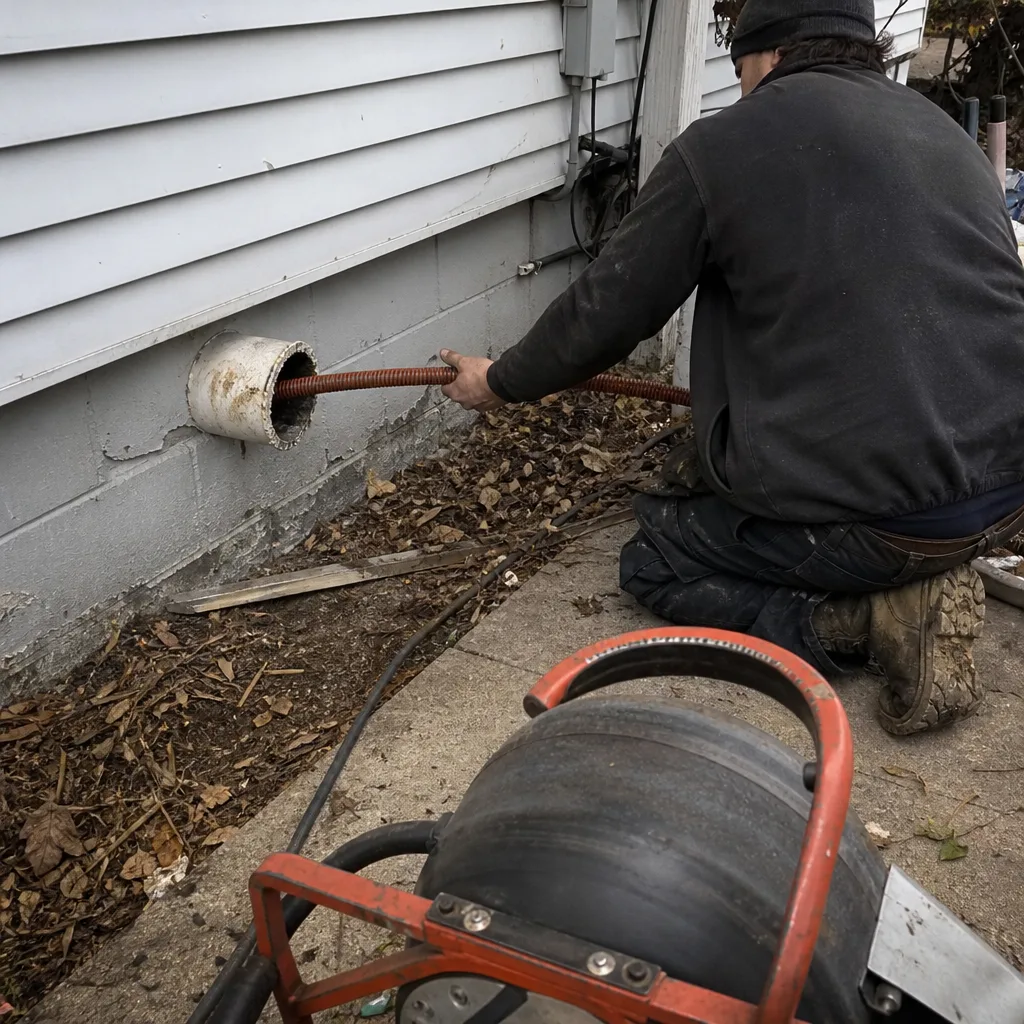 Before
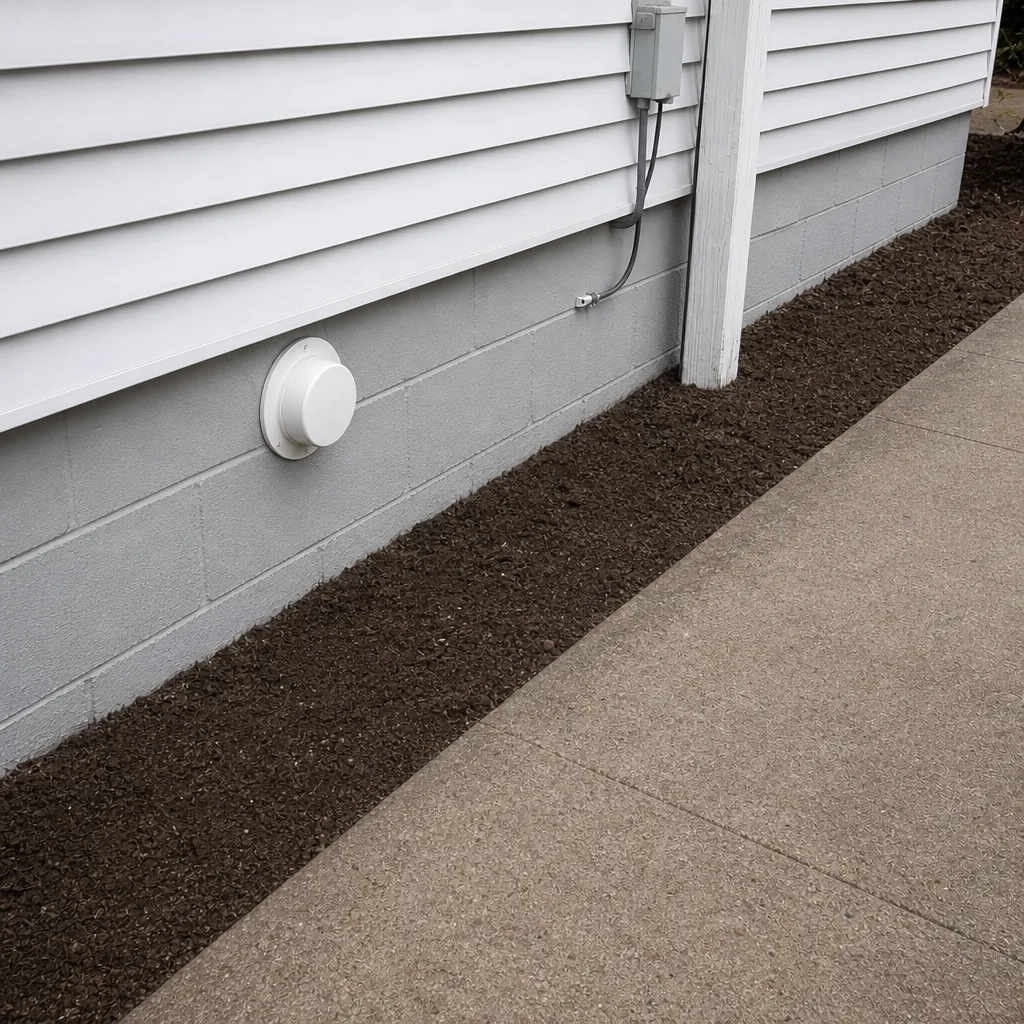 After
When to Call a Professional
You should call for an inspection if any of the following is true for more than a few weeks: dust returns to a room within a week of cleaning; one room is consistently harder to heat or cool than the rest; a musty or chemical smell appears only when the system runs; debris is visible around registers or on the floor beneath them; or you’ve noticed pest evidence in the system. None of those are things a filter swap or a homeowner-level duct cleaning will actually resolve. A professional inspection tells you whether the problem is cleaning, repair, or HVAC, and how the fix should be scoped. Whitman Air Duct Cleaning offers free estimates in Milwaukee – call (866) 729-3894. We answer 24/7. Fast dispatch from 7am to 7pm, Sunday through Friday.
Frequently Asked Questions
Whole-system air duct cleaning in Milwaukee is typically a per-system estimate rather than a per-vent quote – the reason is that a whole-home cleaning involves inspecting every trunk and branch, cleaning returns and supplies, and setting a scope in writing before work starts. Pricing depends on the number of systems in the house, the number of returns, and whether a repair is needed alongside cleaning. Every estimate is free and the written estimate sets the final price. Call (866) 729-3894 for an exact quote – estimates are free.
The cheapest quotes usually reflect the smallest scope: no camera inspection, no containment, no return-side cleaning, and no repair capability if a joint or plenum turns out to be failing. They’re quoting for the easy version of the job on the assumption nothing else is wrong. Ask any company what equipment they’re bringing and whether returns, plenum seams, and leak checks are included in the quote. If those answers are vague, the price difference explains itself. Call (866) 729-3894 for a straight answer on scope – estimates are free.
There’s no fixed schedule – it depends on the system, the home’s age, and what’s actually happening. Homes with pets, recent renovation dust, active mold or moisture issues, or a known pest event usually need it sooner; homes with tight ducting, a well-sealed filter frame, and no moisture problems may go years between cleanings. The right question isn’t “how often” – it’s “does my system show any of the warning signs in this guide?” Call (866) 729-3894 if the answer is yes.
Ask for before-and-after photos of your own ducts, not of someone else’s job. A camera inspection before the work shows what’s actually there; after the work shows what was actually removed. Any company that won’t show you photos of your system before and after isn’t giving you a way to verify. We take those photos as a standard part of the work. Call (866) 729-3894 to schedule an estimate.
Duct cleaning isn’t a medical treatment, and we won’t claim it will fix allergies or respiratory issues. What a dirty duct system does is circulate the same air more times through the same contamination. Biological growth and pest-contaminated systems in particular deserve remediation for their own reasons. If you have health concerns, talk to your doctor; if you have a contaminated system, that’s a duct problem, and it can be fixed. Call (866) 729-3894 – estimates are free.
No – your dryer vent is a separate ventilation path but it’s part of the same indoor air picture, and it has its own warning signs: long dry times, a hot dryer top, lint visible around the outside vent hood, and a musty smell in the laundry area. Dryer vent restriction is a fire-safety concern, and it’s worth having cleaned on its own schedule. Whitman Air Duct Cleaning offers dryer vent cleaning as one of our three core services for exactly this reason. Call (866) 729-3894 for an estimate.
The Bottom Line
Most duct cleaning warning signs are quiet – a room that no longer heats right, a smell that only shows up when the AC runs, dust that returns a week after you clean it. Learn the patterns in this guide, match them to likely causes, and describe what you’re seeing clearly on the call. That’s how you avoid the two most common Milwaukee homeowner mistakes: paying for a cleaning that doesn’t address a repair problem, or letting a small contamination issue cycle through the house for a full season. If two or more of the signs in this guide apply to your home, get them checked. Call (866) 729-3894. We answer 24/7. Fast dispatch from 7am to 7pm, Sunday through Friday.
Written by the team at Whitman Air Duct Cleaning.